Wild Food Foraging for Beginners: 10 Safe Species to Identify First
Most people walk past a dozen edible plants on the way to the shop and never notice them. That is the encouraging part about foraging: you do not need a remote wilderness or a special permit to begin. You need a handful of plants you can recognise without doubt, a few habits that keep you out of trouble, and somewhere ordinary to look. The ten species below are the ones worth handing a beginner first — common, distinctive, and forgiving of the odd fumble in the field.
Four Rules Before You Pick Anything
Identification is a skill, and skills are best built in the right order. Learn the rules first; the plants come quickly afterwards.
- Never eat a plant you have not identified with certainty, and never rely on a single source. Confirm the feature that rules out the lookalikes — the smell, the stem shape, the way leaves attach — not just the general silhouette.
- Learn the dangerous plants near you before the edible ones. Hemlock, foxglove and deadly nightshade deserve an afternoon of study each.
- Pick away from trouble. Skip busy roadsides, sprayed verges, dog-walking paths and ground near industry. Wash everything before it reaches the kitchen.
- Try one new species at a time, in a small quantity. Even a genuinely safe plant can disagree with someone who has never eaten it.
If you are pregnant, taking regular medication, or managing a health condition, treat wild food as a question for a pharmacist or doctor rather than a free salad. That is not caution for its own sake; it is simply how unfamiliar foods work.
Four Leaves to Learn First
Dandelion (Taraxacum officinale)
Deeply toothed leaves in a flat rosette from a single taproot, one yellow flower per hollow stem, milky sap when you snap a leaf. The hollow stem and single flower separate it from cat's ear, which branches and has hairy leaves. Lawns, verges and neglected ground. Young leaves are bitter and excellent with fat; flowers make fritters, roots can be roasted.
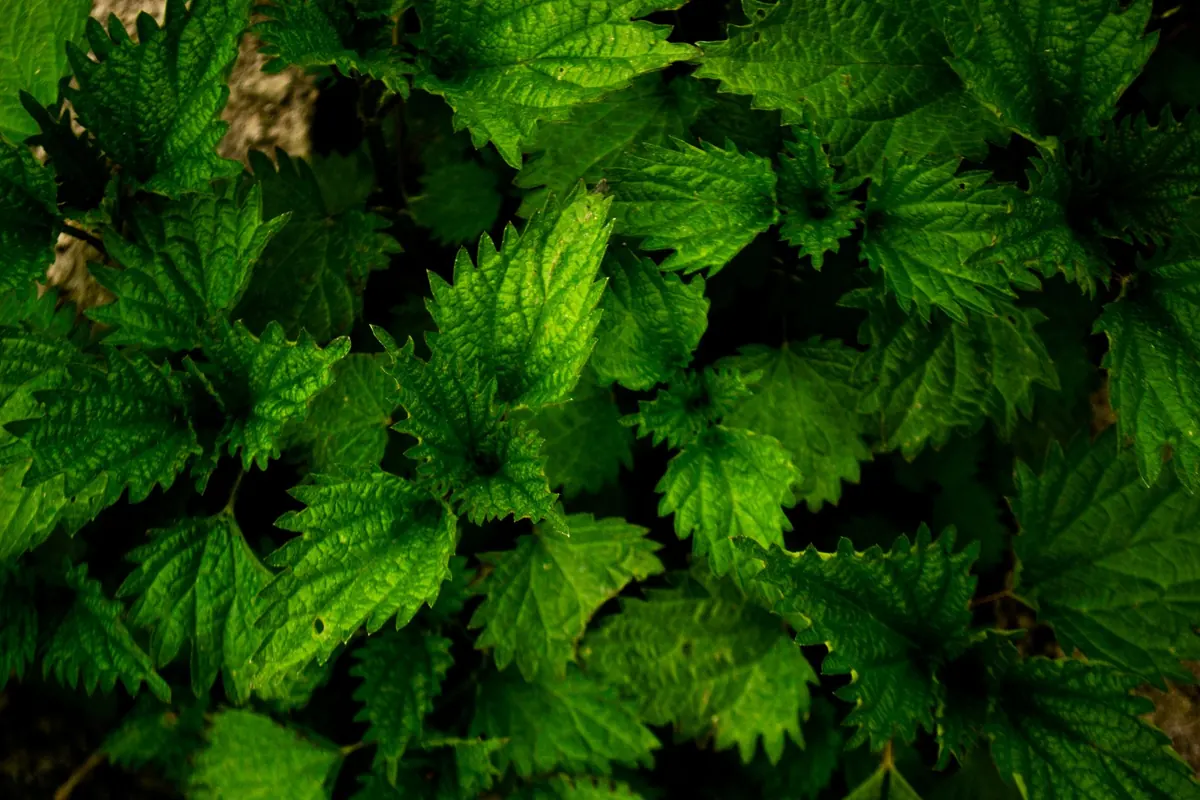
Stinging nettle (Urtica dioica)
Opposite paired leaves with serrated edges, a square stem, and a sting you will remember. Take the top four to six leaves of young spring plants, gloves on, before they flower. Pour on boiling water or blanch for thirty seconds and the sting disappears, leaving something that behaves like spinach in soup, pesto or a purée.
Chickweed (Stellaria media)
A sprawling, bright green plant with small white flowers whose five petals are split so deeply they look like ten. Check the stem: a single line of hairs runs up it and switches sides between each pair of leaves. That detail makes the identification solid. It likes garden beds, allotments and disturbed soil in cool weather, and tastes faintly of corn silk — good raw in salads.
Broadleaf plantain (Plantago major)
Oval leaves growing flat from the base, each with three to seven strong parallel veins running unbroken from stem to tip, plus a thin green seed spike. It grows on paths, lawns and compacted ground almost everywhere. The leaves are tough and slightly bitter; use young ones raw and older ones in stews, or fry them in oil until crisp.
Flowers, Sour Snacks and the Garlic Patch
Wood sorrel (Oxalis acetosella)
Three heart-shaped leaflets arranged like a clover, folding down at night and in rain, with white five-petal flowers veined in pink. The taste is sharp and lemony, and it grows in shady woodland and on mossy banks. Treat it as a garnish rather than a vegetable — the sourness comes from oxalic acid, so keep portions small.
Wild garlic or ramsons (Allium ursinum)
Broad, soft, lance-shaped leaves that carpet damp woodland in spring, with white star flowers above them. Crush a leaf between your fingers and smell it.
If it does not smell unmistakably of garlic, it is not wild garlic.
Lily of the valley and autumn crocus grow in the same woods and do not smell of garlic. Make that smell your final test, and use the leaves raw in sandwiches or blitzed into pesto.
Elderflower (Sambucus nigra)
Flat, creamy, frothy flower heads about the size of your palm, held on a shrubby tree with corky bark, in late spring. Pick on a dry day and shake out the insects. Cordial, fritters and a light sparkling wine are the usual routes. The berries that follow in autumn are for cooking only — raw they upset the stomach, and the stems and leaves are not food at all.
Berries and Fruit for Late Summer
Bramble or blackberry (Rubus fruticosus)
Arching thorny stems, white or pink five-petal flowers, and berries that ripen from green to red to black. The test is simple: a ripe blackberry comes away with almost no pull. Look in hedgerows, scrub and along woodland edges from late summer. Eat them warm off the bush, or cook them into jam, crumbles and vinegar.
Hawthorn (Crataegus monogyna)
Deeply lobed leaves, thorns along the twigs, white blossom in May, and red haws in autumn with a single stone inside each. Hedges, parks and field edges. The haws are dry and mealy, so they shine in ketchup, fruit leather and jelly rather than as a raw snack. If you take heart medication, check with a pharmacist before making hawthorn a regular habit.
Rosehip (Rosa canina and relatives)
Bright red-orange hips in autumn, on the same thorny arching shrubs that carried pink or white five-petal flowers in summer. Split or simmer them for syrup, tea and jelly, then strain through muslin — the fine hairs around the seeds irritate the mouth and gut. A touch of frost improves the flavour.
Habits That Make Identification Easier
Good foragers are not braver than everyone else; they are more careful about small details.
- Carry one field guide and confirm at home with a second source. Two agreeing sources beat one confident app.
- Photograph the whole plant, the leaf arrangement, the stem, the flower and the underside of a leaf before you pick.
- Take a little from many plants rather than everything from one, and leave the roots unless you are dealing with an invasive species.
- Use a paper bag or basket so the plants do not sweat, and keep them cool until you get home.
- Write it down: date, place, plant, what you cooked. One page of your own notes beats a shelf of books by your second season.
Start Small and Stay Curious
Choose two plants from this list and learn them properly this year. Visit the same patch every few weeks and watch it change — nettles toughen, elderflower turns to berry, blackberries darken. That kind of familiarity is what turns identification from guesswork into recognition, and it is far more useful than a long list of species you have only seen in photographs. Add one new plant next season, then another. There is no rush, and the hedgerow is not going anywhere.
Photo: cottonbro studio / Pexels
Drying Wild Mushrooms at Home: Dehydrator, Oven, and Air-Drying Methods
A practical guide to drying wild mushrooms in a dehydrator, oven, or open air, with prep steps, dryness...
Beginner's Guide to Identifying Wild Raspberries, Blackberries, and Dewberries
Learn to tell wild raspberries, blackberries, and dewberries apart by fruit core, cane habit, leaves,...
About Us