How to Forage Blackberries Without Getting Scratched: Tools, Timing, and Etiquette
One hand full of berries, the other hand bleeding. That is how a lot of blackberry seasons begin, and it does not have to be. Brambles are prickly on purpose, but nearly every scratch comes from the same three mistakes: reaching blindly into the middle of a thicket, wearing the wrong sleeves, and tugging at fruit instead of rolling it off the stem. Fix those habits and you can fill a tub in an hour with barely a mark on you.
Read the Hedge Before You Reach Into It
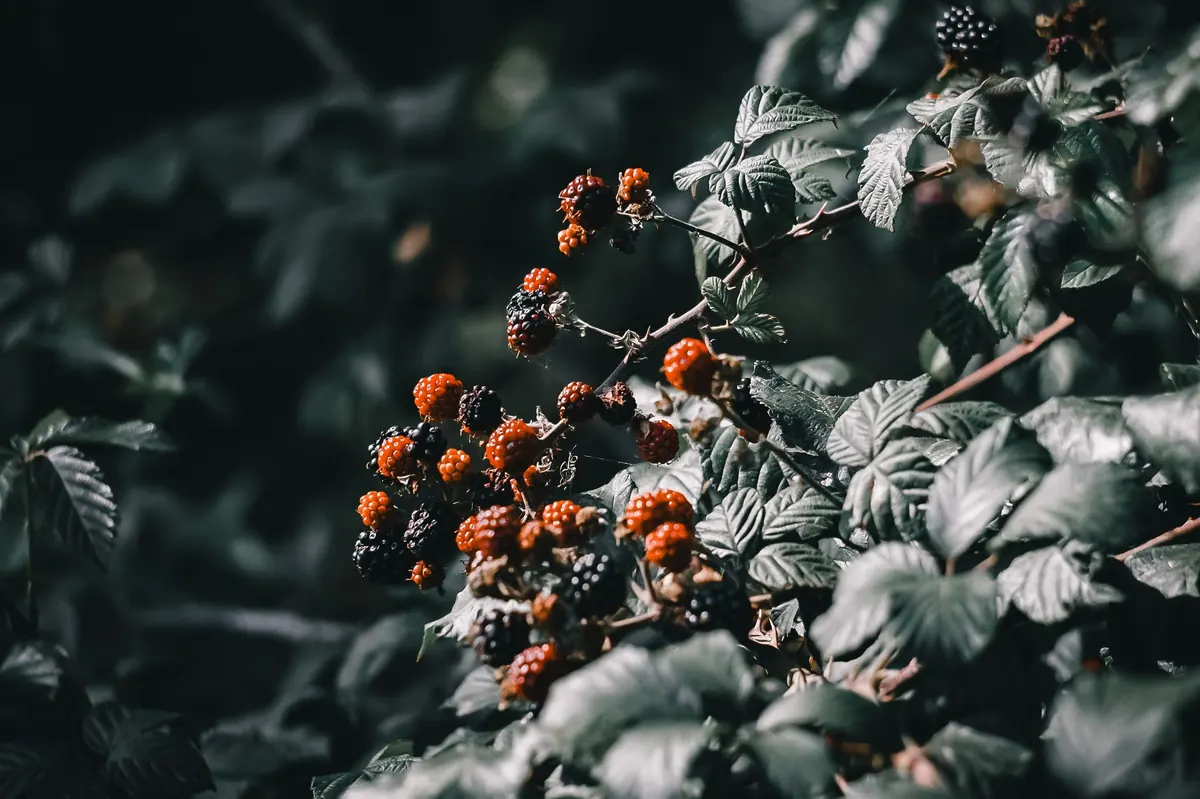
Blackberries ripen unevenly. On a single cane you will find hard green fruit, glossy red fruit that tastes like almost nothing, and fully black fruit that is ready now. Those red berries are not "nearly there" in any useful sense; they are sour and firm and will stay that way for another week or two. Ripe fruit is dull black rather than shiny, and it releases with a light roll of the fingers. If a berry resists, leave it and come back. If it drops into your palm at the first touch, eat it where you stand, because it will not survive the walk home.
Look before you commit a hand. The outside of the bramble is where the sun lands, and it usually holds the sweetest fruit. Plenty of pickers shred their forearms going after a fat cluster deep in the middle when an arm's length along the edge offers better berries at half the risk. Canes that arch over a path or hang into a clearing are often the easiest picking of the day, because the fruit is at chest height and the thorns are already facing away from you.
Timing: Hour, Day, Season
Go out after the dew has dried. Wet berries crush under their own weight, and damp fruit in a closed container turns to mould by evening. Mid-morning is good; the fruit is still cool and firm from the night, and the insects are not yet working in earnest. A hot afternoon brings wasps to the ripest clusters, and a berry patch shared with wasps is a berry patch where you should slow down and pick with your eyes first.
As for the season, blackberries run from midsummer into early autumn depending on where you are and how high up you are. Elevation and shade delay ripening by days or weeks, so a patch that is finished in the valley may still be worth a trip on a north-facing slope. The first week of real abundance usually arrives a fortnight or so after you spot the first dark berries. Pick every few days rather than stripping a patch in one visit; the fruit you leave ripens into the next trip.
Dress Like You Mean It
Long sleeves are non-negotiable, and thicker is better than prettier. Denim, canvas, or a heavy cotton shirt will take a thorn that would otherwise open your forearm. Trousers rather than shorts, closed boots rather than sandals, and a hat for the sun. If you are working through tall grass to reach a patch, tuck your trousers into your socks and check yourself for ticks afterwards, particularly around the waistband and hairline.
On gloves, opinions divide. Thick leather gloves protect you completely and also make it impossible to feel whether a berry is ripe. A reasonable compromise is a thin nitrile-coated gardening glove, or a glove on the hand that holds the cane and a bare hand for picking. Once you can feel the fruit, you pick faster and bruise less.
Four Tools Worth Carrying
- A shallow, wide container. A tray, a mushroom basket, or a bucket lined with a cloth. Deep buckets crush the bottom layer under the weight of everything above it.
- A hook or forked stick. A walking stick with a forked end lets you draw a high cane down to you instead of pushing your arm into the thicket. It is the single most useful thing in the bag.
- Thin gloves for the cane-holding hand, so the thorns meet fabric instead of skin.
- Water and a cloth for washing scratches and sticky hands before you get back in the car.
Leave the secateurs at home. Cutting canes in a wild hedge costs next season's fruit and is exactly the kind of damage that gets foragers banned from a site.
The Reach: Technique That Saves Your Arms
Lift, then slide under
Never plunge. Take the forked stick or your gloved hand, hook a cane, and lift it gently toward you until it clears the tangle. Then slide your picking hand underneath the cane, palm up, so the thorns point away from your wrist and the berries hang down into your fingers. Your sleeve now sits between your forearm and the wood, which is where it belongs.
Roll, do not pull
Curl your fingers around a berry and roll it off the receptacle with the lightest possible tug. Pulling straight down crushes the fruit, squashes the neighbours, and tears the cane tip you were going to pick from next week. Work the outer edge first and move inward only when the outside is picked clean. If a scratch happens, rinse it with clean water when you get to the car or the tap, and see a doctor if a wound becomes red, hot or swollen, or if a thorn stays embedded under the skin.
Etiquette: Leave the Bramble Better Than You Found It
Bend canes, do not break them. Let them back gently rather than letting them snap across other growth. Do not strip a bush bare; leave a share for the birds, for the foxes, and for whoever walks this way tomorrow. Stay out of the middle of the thicket, where you trample next year's canes and disturb whatever is nesting underneath.
Permission and rules matter. Access on public land, in nature reserves, in parks and on private property varies enormously from place to place, so check the local position before you fill a bag. Avoid hedges beside busy roads where exhaust and spray drift settle on the fruit, and skip the edges of agricultural fields unless you know the landowner and what has been applied there. Take your containers and any litter home with you.
After the Picking
Get the berries out of the sun and into the shade or a cool box as soon as you can. At home, tip them onto a tray in a single layer and pick out leaves, stalks and any berry that has gone soft, because one squashy fruit will take the rest with it. Rinse them briefly just before eating rather than soaking them, which turns them mushy. Eat what you can fresh, freeze the rest in a single layer on a tray before bagging, and the season lasts into winter. A quick rinse of your own scratches, a look for ticks, and a check that no thorn has stayed behind in a fingertip is the last job of the day.
Photo: Lainey Leon / Pexels

Drying Wild Mushrooms at Home: Dehydrator, Oven, and Air-Drying Methods
A practical guide to drying wild mushrooms in a dehydrator, oven, or open air, with prep steps, dryness...
Beginner's Guide to Identifying Wild Raspberries, Blackberries, and Dewberries
Learn to tell wild raspberries, blackberries, and dewberries apart by fruit core, cane habit, leaves,...
About Us