Beginner's Guide to Identifying Wild Raspberries, Blackberries, and Dewberries
A ripe wild raspberry, still warm from the sun, is one of the better arguments for carrying a bucket on a summer walk. Before you can fill one, though, you have to know what you're looking at. Raspberries, blackberries, and dewberries all belong to the genus Rubus — the brambles — and they often grow within a few steps of each other, tangled together along the same fence line. Once you learn the handful of features that separate them, identification becomes quick and mostly certain.
Here's the good news: every bramble fruit is edible. Nobody in this group is going to hurt you. The real challenge is telling them apart so you know what you're picking, when to come back, and what to expect in the bucket.
The Berry Itself Gives the Answer
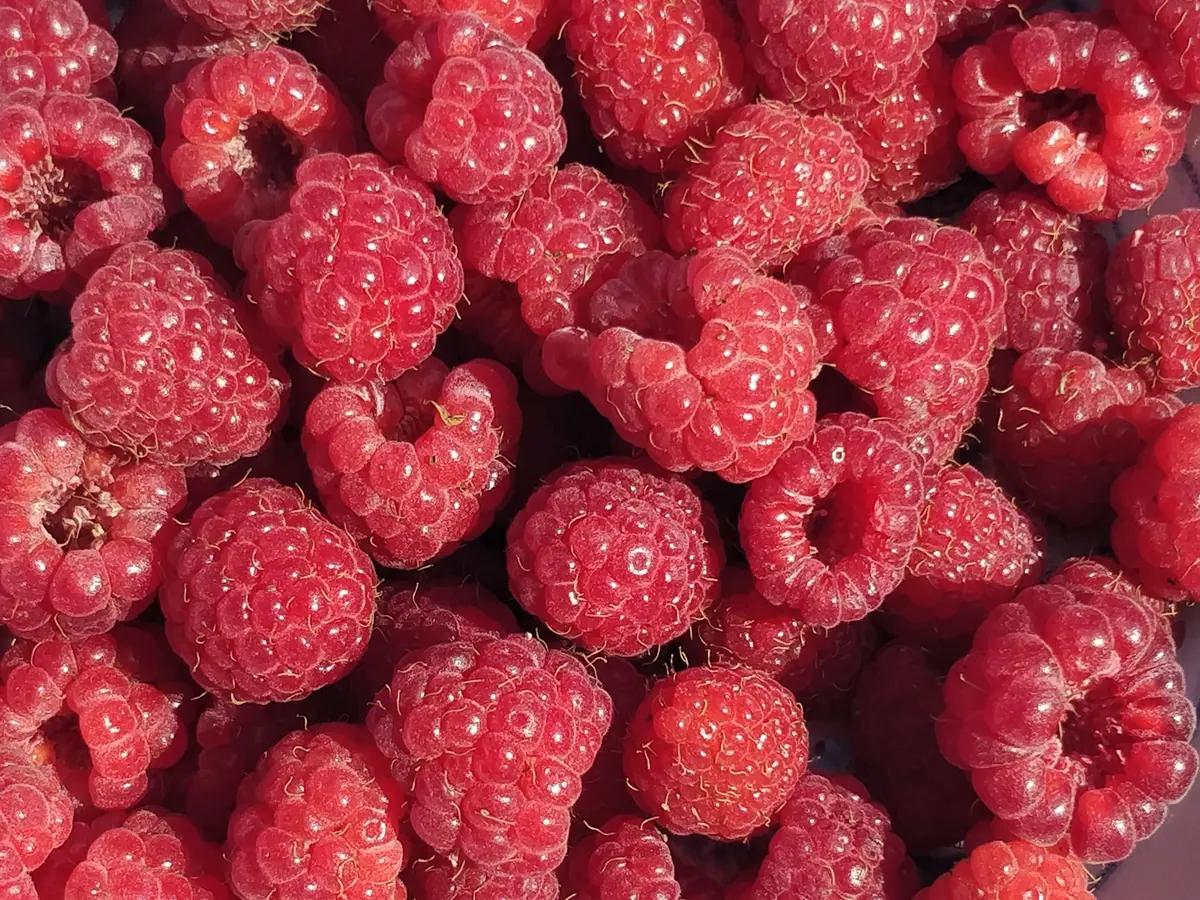
Pick one berry and turn it over. If it comes away from the plant cleanly and leaves a hollow, thimble-shaped cup, you have a raspberry. The pale, cone-shaped core — the receptacle — stays behind on the stem. A ripe raspberry practically falls into your hand.
If the berry pulls off with that core still attached, filling the middle like a plug, it's a blackberry or a dewberry. Run your thumbnail into the center and you'll find a firm, slightly woody white nub. That single test settles most of the confusion in the field.
Black raspberries are still raspberries
This trips people up constantly. Black raspberries ripen to a deep, dusty black and look almost exactly like small blackberries, but they're hollow inside. They also tend to be smaller, with a bluish bloom on the fruit and a flavor that's sweeter and more floral than a blackberry's. If it's black and hollow, it's a raspberry.
Drupelet size is another clue. Raspberries are made of many small, tightly packed beads. Dewberries usually have fewer and noticeably larger drupelets, so the fruit looks chunky and may fall apart in your fingers when fully ripe.
Cane Habit: Upright, Arching, or Trailing
Step back and look at the plant as a whole. How it grows is often more reliable than any single berry.
- Raspberries: canes grow upright to arching, usually slender, and armed with fine bristles rather than heavy spines. Black raspberry canes arch dramatically and often root where their tips touch the ground, forming new plants. Red raspberry canes are typically biennial — first-year canes just grow leaves, second-year canes flower and fruit.
- Blackberries: stout, arching canes, often angular or ridged, with large flattened prickles that hook into clothing and skin. They commonly reach chest height or higher in a good thicket.
- Dewberries: trailing. The canes run flat along the ground, forming loose mats rarely more than a foot or two tall. The prickles are small and hooked, and you usually feel them on your ankles before you see them.
One local quirk worth knowing: in the Pacific Northwest, the native trailing blackberry is dioecious, meaning male and female flowers sit on separate plants. Some patches will never produce fruit no matter how long you wait.
Leaves and the Underside Test
Bramble leaves are compound, with toothed edges and three to five leaflets. Flip a leaf over. Red and black raspberry leaves usually have a frosty, whitened underside that contrasts sharply with the green top. Blackberry leaves are more often green on both sides and a little leathery, with five leaflets arranged palmately — all radiating from one point, like fingers on a hand.
Dewberry leaves are typically smaller and usually carry just three leaflets on the trailing stems. That's also where beginners get nervous, because "leaves of three" is the old warning for poison ivy. Use the stems to sort it out: brambles are prickly or bristly, while poison ivy has smooth, hairless stems and no thorns. Poison ivy also never grows an aggregate berry made of clustered beads.
Habitat Clues
Raspberries favor edges and partial shade — old logging roads, stream banks, woodland clearings, and the sunny margin where a forest meets a field. They like their roots cool and their fruit in the light.
Blackberries are aggressive about open, disturbed ground: fence rows, ditch banks, pasture corners, clearcuts, and any scraped-up soil. In the Pacific Northwest, the introduced Himalayan blackberry has taken over enormous stretches of roadside and riverside, and it is every bit as good eating as it is unwelcome.
Dewberries like it drier and more open. Think sandy pastures, roadsides, pine woods, and bare patches in a field, especially across the South and Midwest. Where a trailing cane sprawls across short grass in full sun, you're likely looking at a dewberry.
Treat habitat as a hint rather than proof. The ranges of these plants overlap constantly, and a single hedgerow can hold all three.
Season: A Rough Calendar
Timing narrows things down fast. These dates assume the Northern Hemisphere and shift with latitude and elevation — a patch at 4,000 feet can run three weeks behind one in the valley below.
- Dewberries: late spring into early summer, often the first brambles to ripen — May and June in the South, June and July farther north.
- Black raspberries: early summer, roughly June through July. The harvest is short, often two or three weeks, and an entire patch tends to finish at once.
- Red raspberries: early to midsummer, with some canes and species producing a smaller second crop into fall.
- Blackberries: midsummer into early fall — the latest to start and the longest to pick.
A ripe blackberry is dull black with no red drupelets left on it. Red means sour, every time. Dewberries go black with a faint dusty bloom. Raspberries should slip free with almost no pull; if you have to tug, give it another day.
You'll sometimes see pale, whitish drupelets on an otherwise ripe blackberry. That's usually a heat and sun effect rather than disease, and the berry is fine to eat — just a bit less sweet.
Picking Well and Picking Safely
Brambles don't ripen after picking, so only take fruit that's ready. Bring shallow containers and never stack berries more than two or three deep; a full bucket of crushed blackberries is a sad thing to carry home. Keep them cool, refrigerate quickly, and plan to eat, cook, or freeze them within a day or two, because they mold fast.
Pick away from busy roadsides, sprayed fence lines, and field edges that may have been treated with herbicide. Give the berries a rinse before eating, and wear long sleeves and gloves unless you enjoy scratched forearms. A walking stick helps you part a thicket without reaching into it blind.
Most of all, slow down. Taste one berry from each patch and note the difference — the flatter, sweeter black raspberry against the bolder blackberry, the tangy dewberry that ripens first. If you're new to foraging, go out with someone experienced, and if you're ever uncertain about a plant's identity, leave it alone. If you have food allergies or a medical condition, check with a doctor before adding wild foods to your diet. Leave plenty of berries on the canes for birds and for next year's harvest, and the patch will keep feeding you for years.
Photo: Teodor Buhl / Pexels
Drying Wild Mushrooms at Home: Dehydrator, Oven, and Air-Drying Methods
A practical guide to drying wild mushrooms in a dehydrator, oven, or open air, with prep steps, dryness...
How to Harvest Stinging Nettles Safely: Gloves, Timing, and Cooking
A practical guide to identifying, picking, blanching and cooking stinging nettles — with the gloves,...
About Us